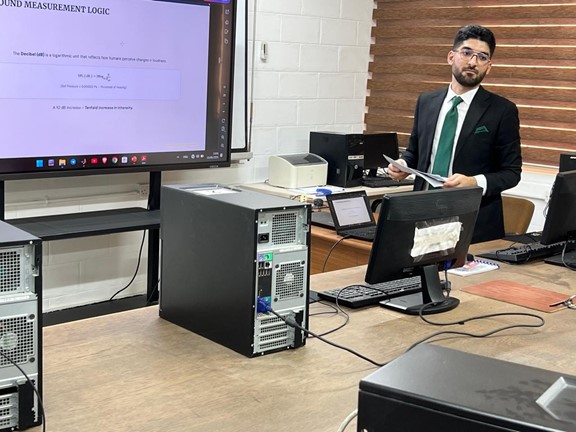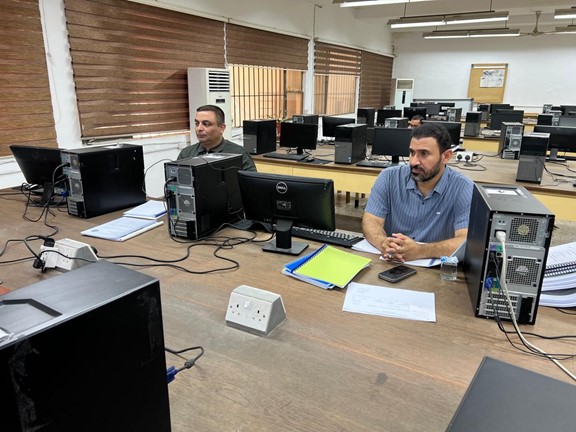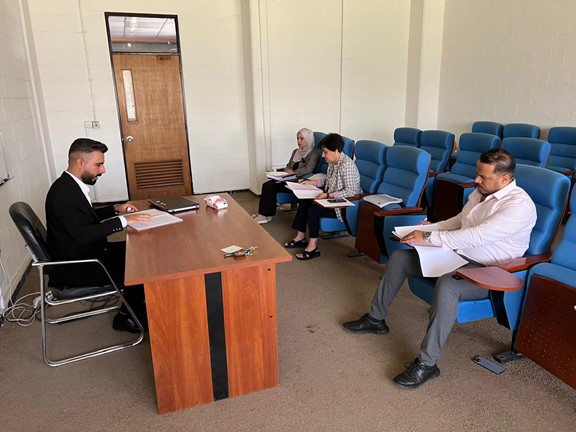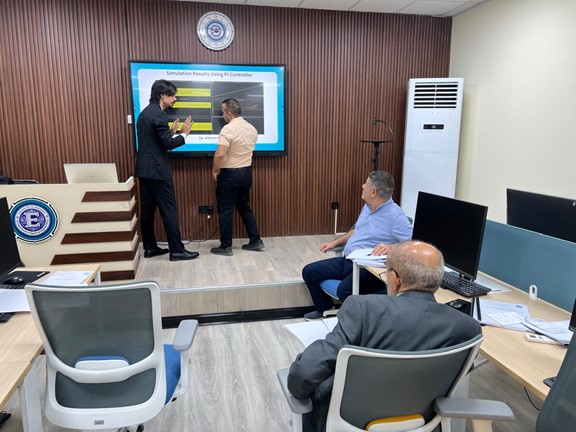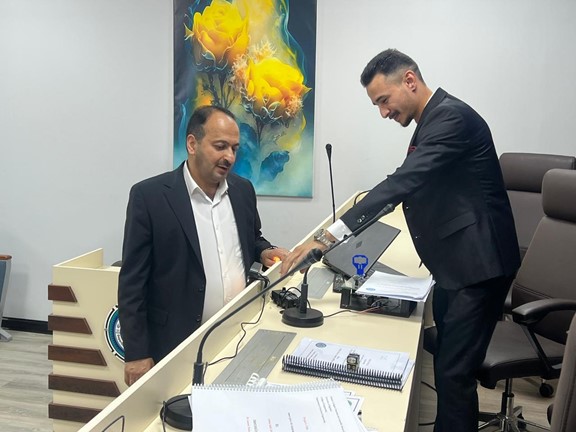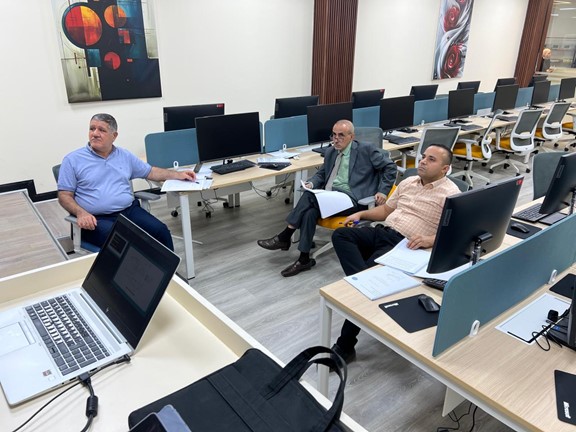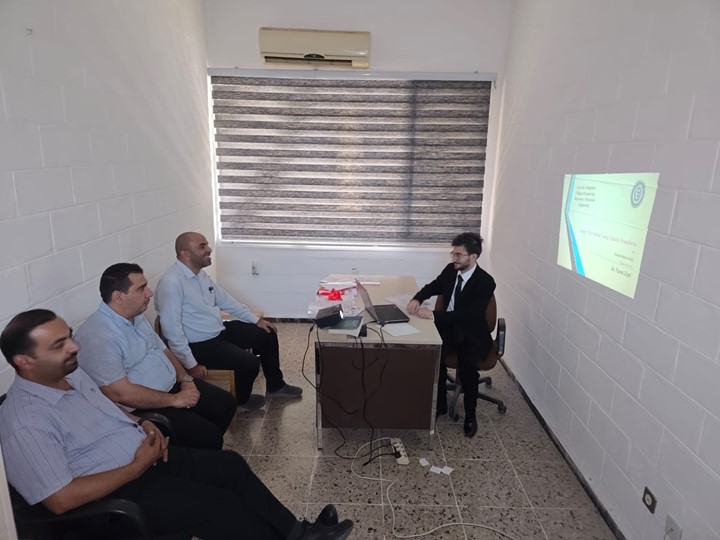
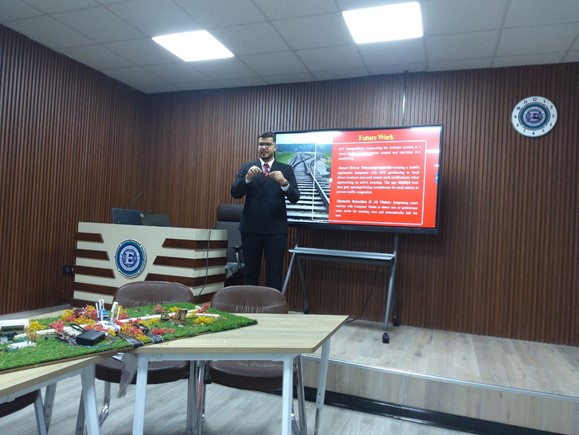
The Department of Electrical Engineering at the College of Engineering, University of Baghdad, held the graduation project discussions for fourth-year students of the 2025–2026 academic year on Monday, 15 June 2026. The discussions took place in a rigorous academic environment that reflected the advanced academic standing of both the College and its students.
The evaluation committees were organized into nine specialized groups covering various fields of electrical engineering. A total of 55 engineering projects were assessed across the Department’s classrooms and laboratories, ensuring comprehensive coverage of different specializations and providing a well-structured scientific evaluation environment.
The projects addressed a wide range of topics, including digital control systems, medical systems, and artificial intelligence, in addition to automation, intelligent robotics, motor control, robotic arms, water quality monitoring, and assistive systems for individuals with special needs. The projects also covered renewable energy technologies, power conversion systems, solar energy applications, electrical supply systems, microgrid management, transformer modeling, and electric vehicle chargers.
Other projects explored sustainable lighting applications, irrigation systems, the use of MATLAB software, wireless parking systems, image encryption, low-power logic gates, vertical take-off aircraft, ultra-small antennas, and applications of Programmable Logic Controller (PLC) systems.
The outcomes of this year’s projects demonstrated a clear commitment to keeping pace with modern technological developments, particularly in the fields of generative artificial intelligence, intelligent robotics, renewable energy, and advanced communications. These achievements highlight the readiness of graduates to contribute innovative engineering solutions to the labor market as well as to research and industrial institutions.
At the conclusion of the discussions, the Head of the Department commended the scientific efforts of both the academic committees and the students, praising the high quality of the submitted projects and the progress they reflect in students’ engineering and research skills.