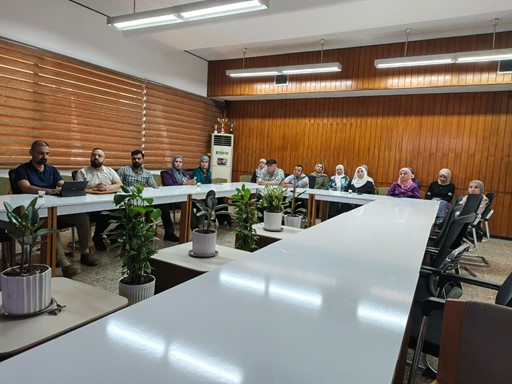
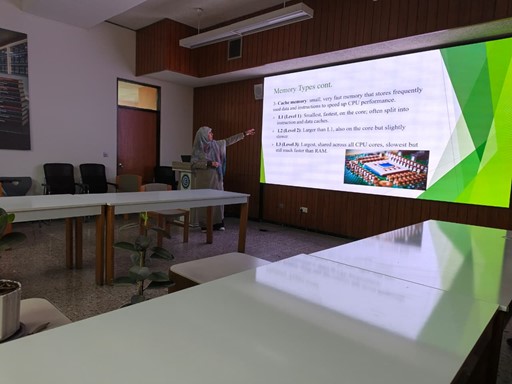
As part of its efforts to keep pace with rapid advancements in computer science, the Department of Electrical Engineering at the College of Engineering, University of Baghdad, in cooperation with the Continuing Education Unit, organized a specialized workshop entitled “The Evolution of Memory in Computer Systems.” The workshop was delivered by Dr. Farah Mahdi on Monday, May 25, 2026, in the department meeting hall, with the attendance of a number of faculty members and staff.
The workshop aimed to enhance participants’ understanding of recent developments in computer memory technologies and to highlight their role in improving the efficiency of computer systems and supporting modern applications.
It addressed the concept of electronic memory and its importance in operating computer systems, while reviewing its evolution in terms of speed, capacity, and reliability. The workshop also explained the main types of memory, including primary, secondary, cache, and virtual memory, and clarified their operational mechanisms and contribution to system performance improvement.
In addition, it discussed the differences between DRAM and SRAM, as well as the evolution of dynamic random-access memory from SDRAM to DDR5. It also covered SSD technology based on NAND Flash, along with memory cell types such as SLC, MLC, TLC, and QLC.
The workshop concluded with a set of recommendations emphasizing the importance of incorporating advancements in memory technologies into academic curricula, supporting scientific research in this field, and strengthening the integration between theoretical and practical aspects in computer engineering disciplines, thereby enhancing participants’ scientific and technical competencies.