Petroleum Engineering
The Department was established in the academic year 1958/1959 as one of the departments within the College of Engineering at the University of Baghdad. Its primary objective is to equip students with the required skills and knowledge to become expert personnel in petroleum engineering through a four-year programme. Upon completing 170 credit hours, students will receive a Bachelor’s degree in Petroleum Engineering.
The departmental programme covers an array of petroleum engineering subjects, encompassing oil and gas well drilling, reservoir engineering, production engineering, gas technology, and secondary oil extraction techniques. The department first launched the Master’s programme in 1980. Following this, in 1992, the Doctoral programme began, which now features specialisations in the areas of production engineering, reservoir engineering, and drilling engineering.
Vision:
The department is staffed by instructors who possess either a Ph.D. or a Master’s degree in Petroleum Engineering. They have graduated hundreds of Iraqi and Arab engineers in undergraduate and postgraduate studies in the previous five decades. Currently, numerous graduates hold technical and academic positions in various government departments, within and outside of Iraq, and the private sector.
Mission:
Since 2003, the department has taken concrete measures to enhance its partnerships with global oil companies, including Total, CMG, BP, and Schlumberger in diverse domains.
The Department of Petroleum Engineering has set the goal of cultivating esteemed petroleum engineers competent to
- work in diverse domains of the oil and gas industry.
- Support the educational process in accordance with international accreditation standards to attain the department’s vision and mission.
- Improve the competencies of the teaching staff and attract exceptional talents to the department.
- Furnish robust applied scientific research that encompasses novel knowledge that can be employed in both local and global markets.
- Bolster the confidence of the community and external institutions in the department’s achievements.
- Encourage scientific collaboration, exchange arrangements, and alliances with corresponding departments and research institutions in developed nations.
- Academic Research
- Graduation Projects
Department Head: [email protected]
Distribution of undergraduate students by academic level
The distribution of male and female undergraduate students

College of Engineering – University of Baghdad Petroleum Engineering Department
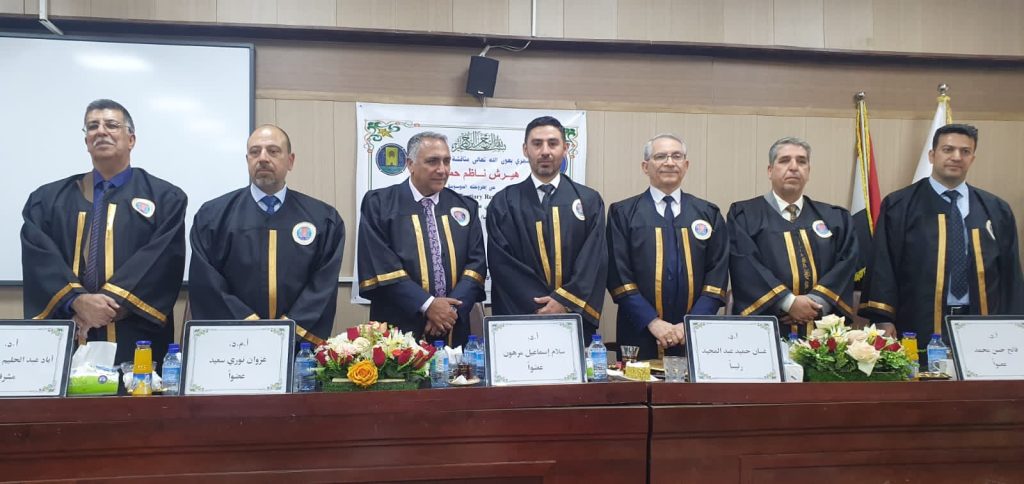
The College of Engineering at the University of Baghdad, represented by the Petroleum Engineering Department, witnessed the public defense of
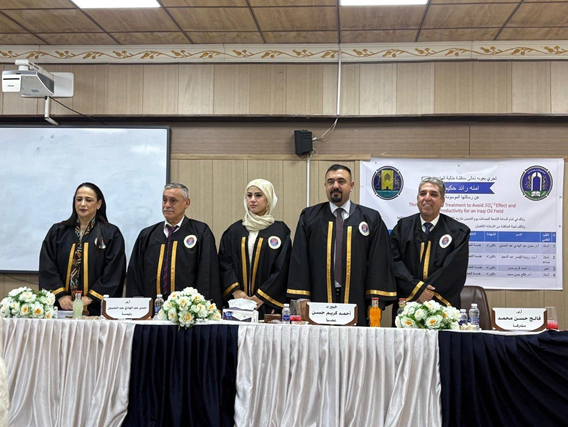
Master’s Thesis Defense in the Department of Petroleum Engineering – University of Baghdad
The College of Engineering at the University of Baghdad held the public defense of the Master’s thesis submitted by researcher

A Delegation of Petroleum Engineering Students from the University of Baghdad Participates in the Fourth International Geological Championship in Russia
In an effort to promote knowledge exchange and build bridges of cooperation among students and researchers from different countries
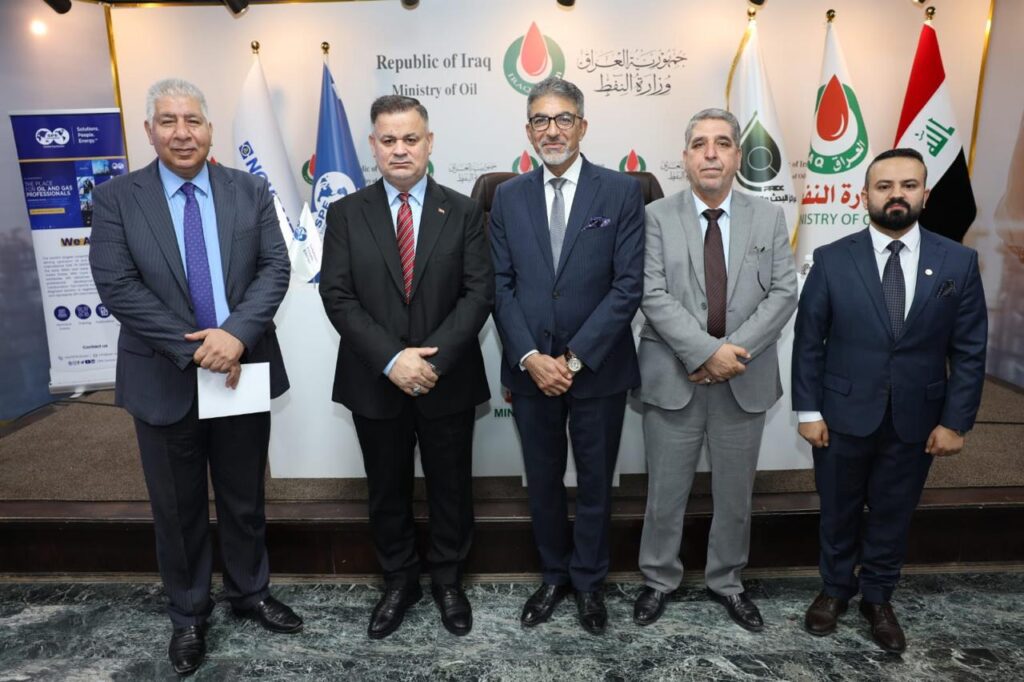
College of Engineering Strengthens Its Academic Presence at a Specialized Seminar on Oil Production Technologies
Upon an official invitation, Assistant Dean of the College of Engineering for Administrative Affairs, Prof. Dr. Faleh Hassan, participated on
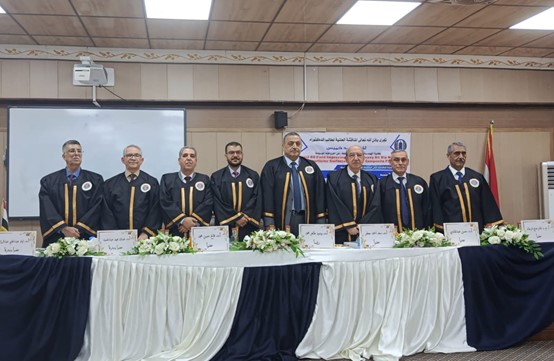
Examination of PhD Dissertation in the Petroleum Engineering Department
The Petroleum Engineering Department at the College of Engineering, University of Baghdad, held a PhD dissertation examination titled: Improving the
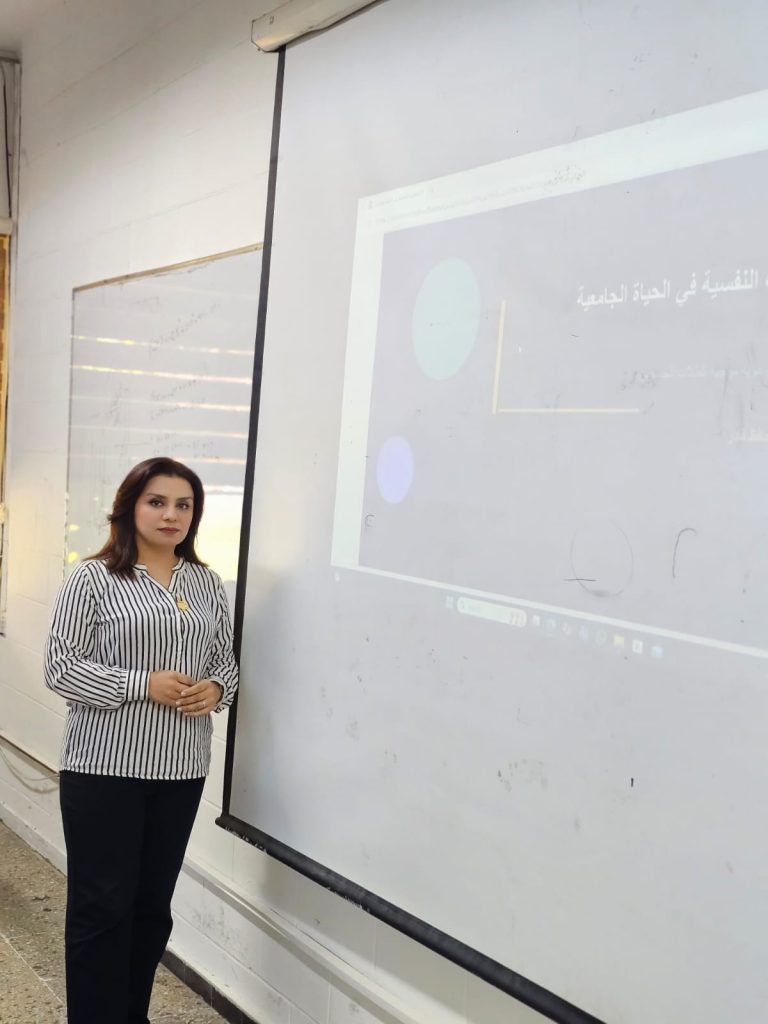
Human Rights Unit at Baghdad Engineering Organizes Workshop on Psychological Challenges in University Life
The Human Rights Unit at the College of Engineering, University of Baghdad, in cooperation with the Continuing Education Center and