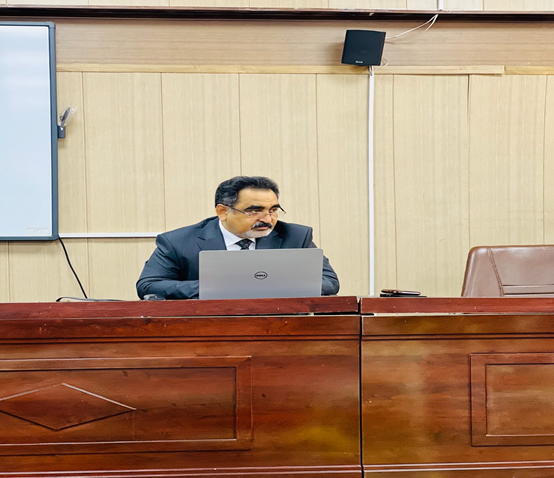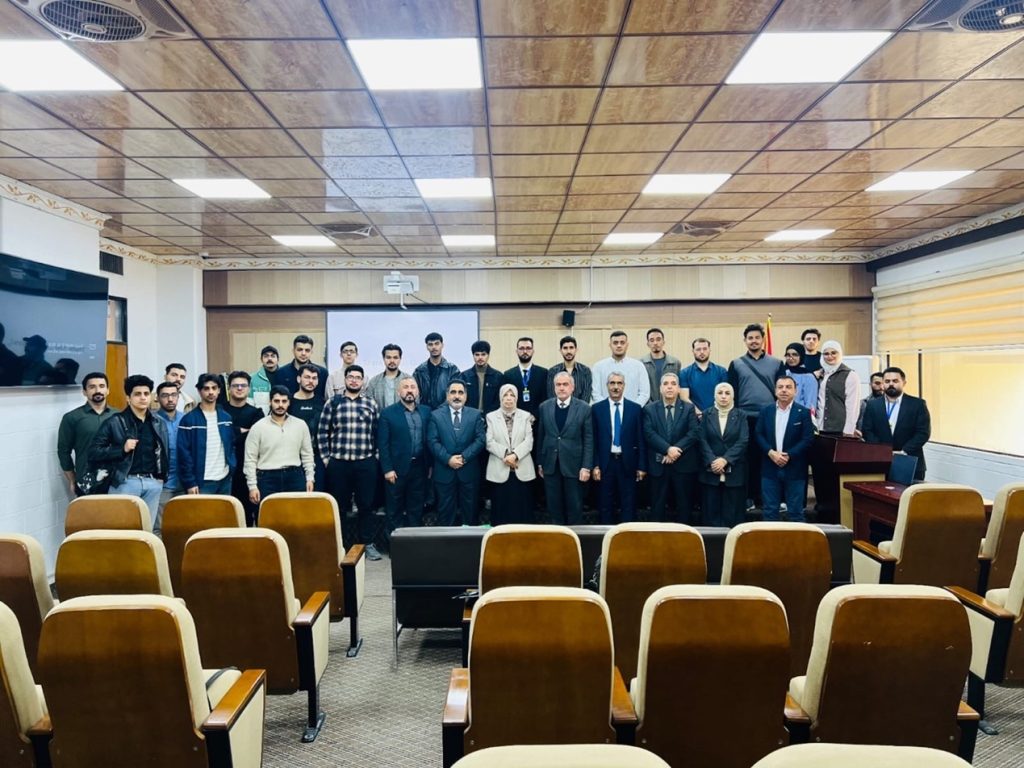
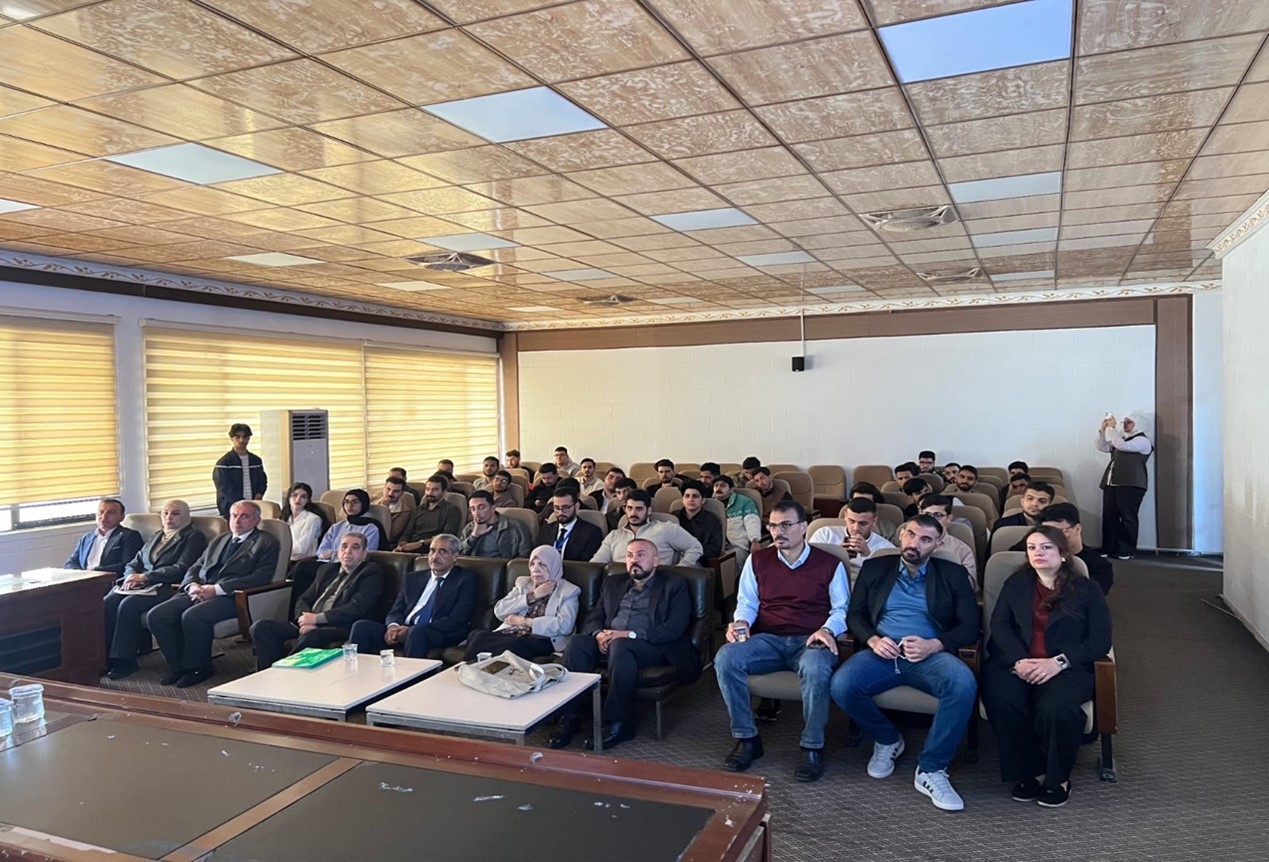
The Department of Petroleum Engineering at the University of Baghdad, in collaboration with the Society of Petroleum Engineers – University of Baghdad Student Chapter (SPE-UOB Chapter), concluded a specialized scientific seminar entitled “The Fourth Industrial Revolution in Flow Assurance Engineering for Iraq’s Oil Sector.” The seminar was delivered by the international expert Dr. Amer Al-Wazzan, Production Assurance Manager for Planning and Strategy at Dragon Oil – Dubai.
The seminar was held on Monday, February 16, at 10:30 AM, in the Discussion Hall of the Department of Petroleum Engineering, University of Baghdad, and was attended by a number of faculty members as well as undergraduate and postgraduate students. The event witnessed active engagement and in-depth discussions on the current status of Iraq’s extraction industry and its future development.
The seminar primarily focused on the concept of proactive Flow Assurance, where Dr. Al-Wazzan highlighted how Fourth Industrial Revolution technologies can be utilized to predict potential obstacles and prevent their occurrence inside pipelines after extraction processes, rather than relying on costly traditional solutions that are applied only after problems arise.
The seminar also addressed the major challenges affecting oil and gas flow and the technical approaches to deal with them, including:
- Wax Formation and methods to prevent deposition that may lead to pipeline blockage.
- Gas Hydrates and their serious effects on operational pressure conditions.
- Asphaltenes and their deposits that hinder fluid movement.
- High Viscosity and the challenges of efficiently pumping heavy crude oil.
At the conclusion of the seminar, emphasis was placed on the importance of adopting digital solutions and advanced simulation and modeling techniques to reduce operational costs and ensure the continuity of national production. The seminar also highlighted the significant role of such academic events in bridging the gap between academic curricula and the rapidly evolving demands of the global labor market.