
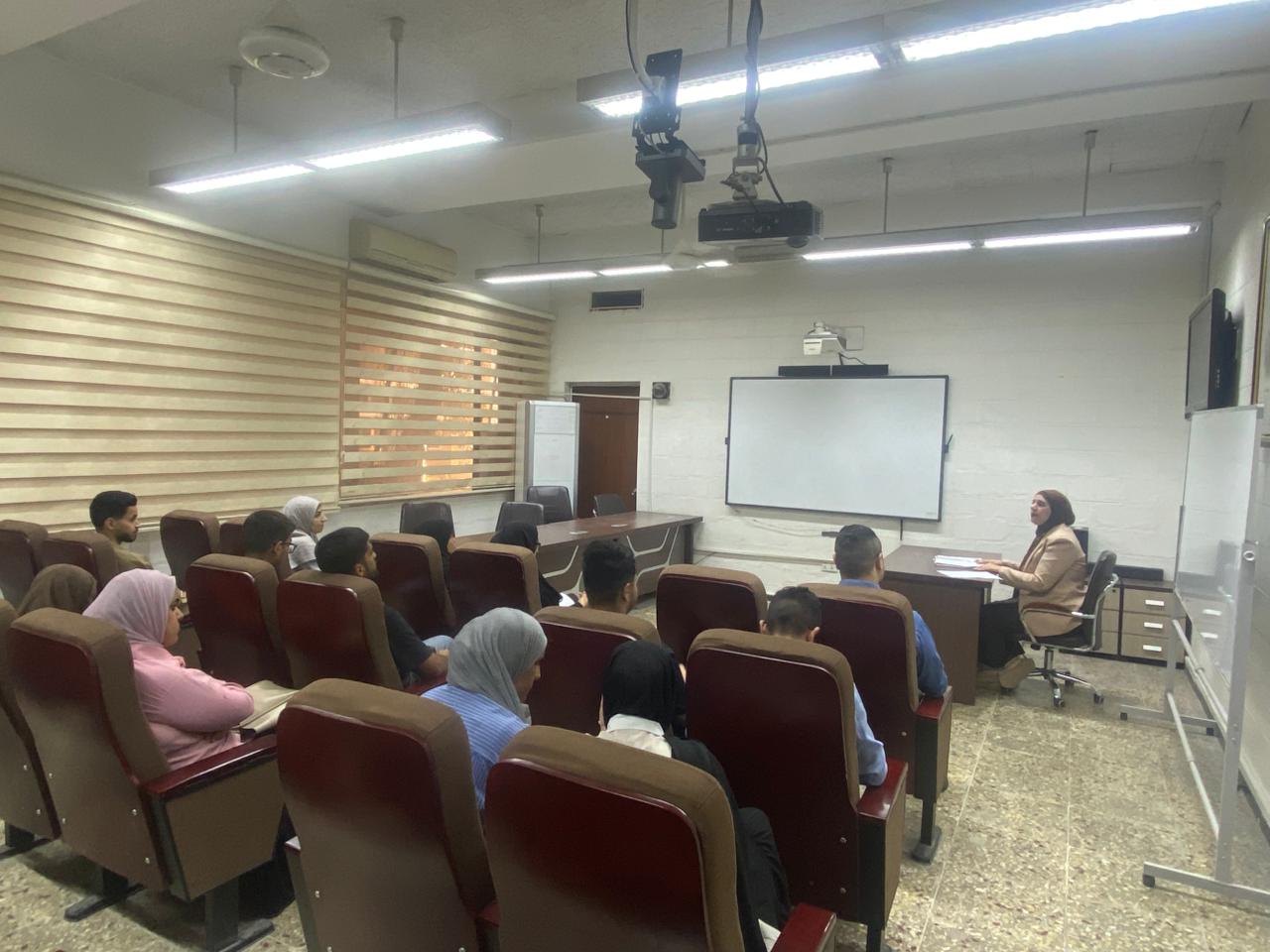
Under the patronage of the Dean of the College of Engineering at University of Baghdad, Professor Dr. Ghassan Hamid Abdul Majeed, the Psychological Counseling and University Guidance Unit at the College of Engineering, in cooperation with the Continuing Education Unit and the Department of Surveying Engineering, organized an awareness workshop entitled “Factors Associated with Drug Abuse Among University Youth and How to Confront Them.” The workshop was delivered by Assistant Lecturer Tayba Hussein Mizal on Wednesday, April 29, 2026, at Al-Ustadh Fawzi Al-Khalisi Hall in the Department of Surveying Engineering.
The workshop aimed to shed light on the phenomenon of drug abuse among university youth and to raise awareness of its dangers and negative impacts on mental and physical health, as well as on academic behavior. It also sought to support preventive efforts within the university environment to limit the spread of this phenomenon.
The workshop addressed the main factors leading to drug abuse, including social, familial, psychological, and economic aspects, while explaining their negative effects on students. It also discussed mechanisms for confronting the issue and promoting a culture of prevention within the university community, contributing to the creation of a safer and more stable educational environment.
At the conclusion of the workshop, Assistant Lecturer Tayba Hussein Mizal emphasized the importance of intensifying awareness programs within educational institutions regarding the dangers of drugs, and activating the role of psychological and social counseling in supporting students and helping them cope with various pressures. She also stressed the importance of strengthening the role of families in positive supervision and guidance, as well as developing young people’s refusal and decision-making skills to reduce the influence of peer pressure.
She further highlighted the importance of addressing economic factors by providing training and qualification opportunities that help reduce unemployment and idleness. In addition, she emphasized the need to strengthen cooperation between universities and health and security institutions in order to establish integrated preventive programs that contribute to limiting the spread of this phenomenon within the university community.


