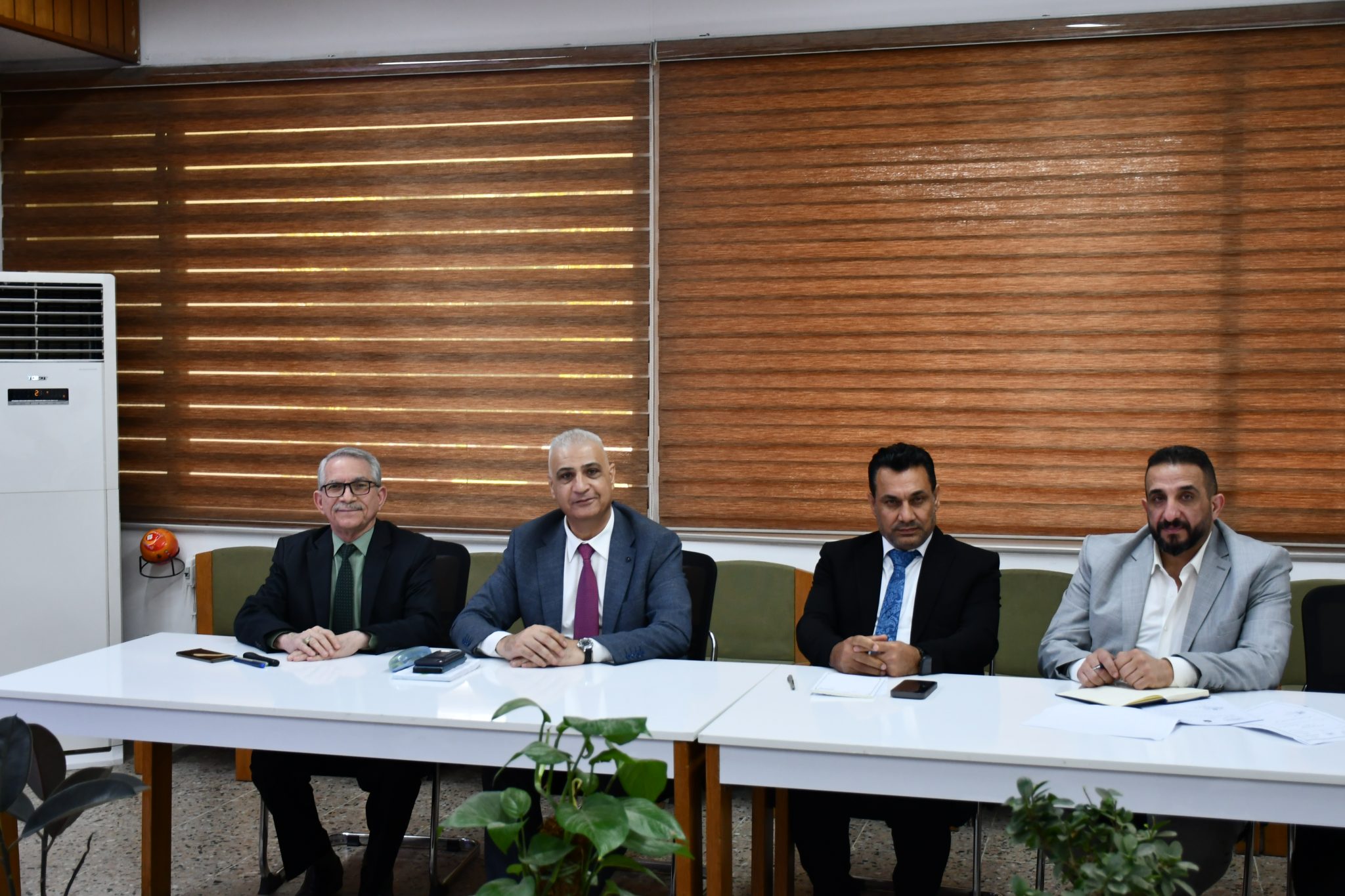
As part of the ongoing efforts of the College of Engineering to implement the “Educational Productive Factories” project, the committee formed under the Diwani Order held its first meeting at the College of Engineering. The meeting took place on Wednesday, April 15, in the smart hall of the Electrical Engineering Department, with the attendance of a delegation representing the Prime Minister’s Office.
This meeting was held in the context of following up on the implementation of directives issued under the Diwani Order, and to discuss practical mechanisms for applying the educational factories project in a way that achieves its strategic objectives. These include linking engineering education with practical application, supporting innovation, and serving both the academic and industrial communities.
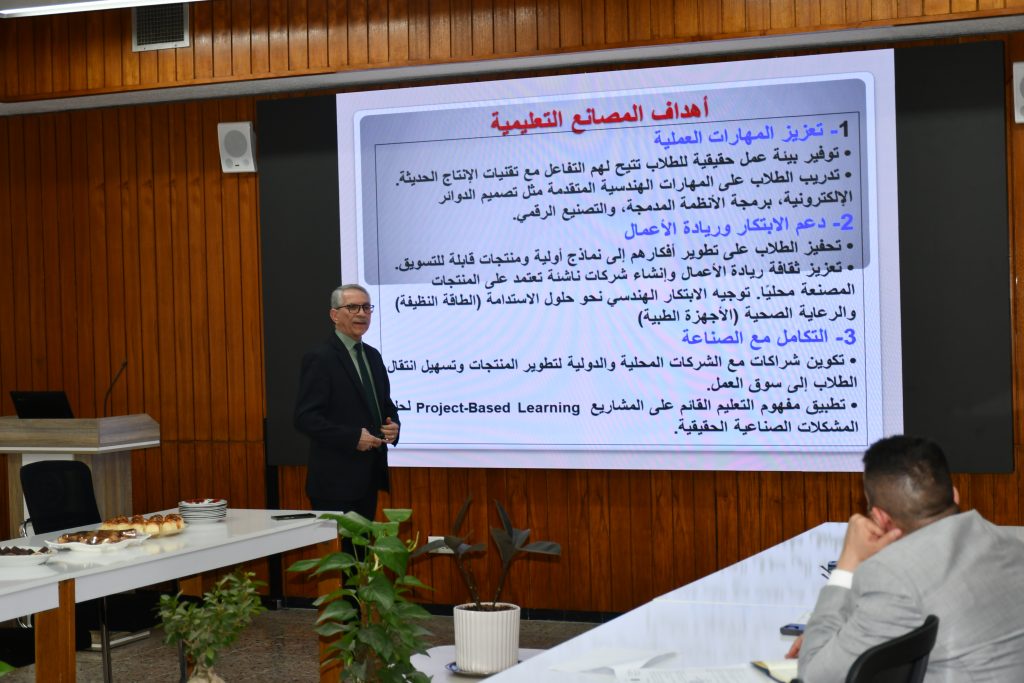
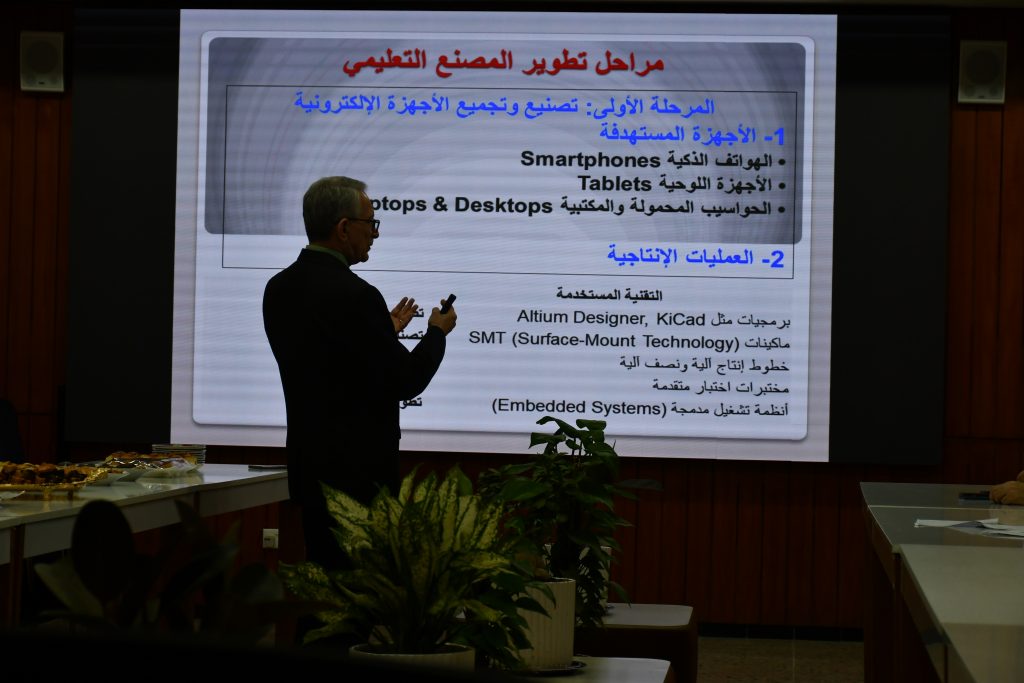
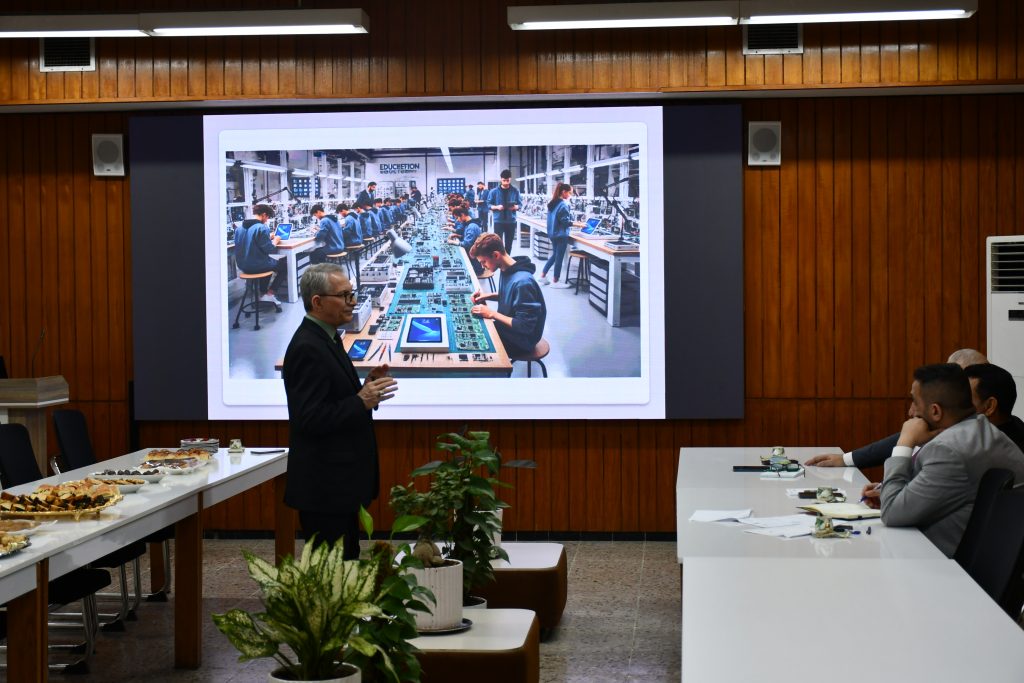
During the meeting, the Dean of the College of Engineering, Professor Dr. Ghassan Hamid Abdul Majeed, reviewed the key components of the educational productive factories project. He presented its scientific and implementation details, outlining the overall vision, strategic objectives, implementation phases, and mechanisms for integrating it with educational and research processes. This integration aims to enhance students’ practical skills, support innovation, and strengthen the college’s role in serving society and industry.
The meeting also featured a comprehensive presentation of the recommendations and proposals prepared by the subcommittee formed within the College of Engineering. The discussion covered available resources for implementing the project, proposed work phases, required infrastructure, and ways to utilize the project in developing students’ practical skills, enhancing applied research, and opening opportunities for collaboration with both the public and private sectors.
The delegation from the Prime Minister’s Office emphasized the importance of the project at both the educational and national levels, considering it a significant step toward transforming universities into productive educational institutions that contribute to supporting the national economy and reducing the gap between higher education outcomes and labor market needs. The delegation also provided technical and organizational remarks aimed at enhancing the project’s feasibility and ensuring its sustainability.
At the conclusion of the meeting, the Diwani Order Committee reached a set of final recommendations following discussions and exchange of views. These recommendations will be submitted to the Prime Minister’s Office for approval and necessary action, paving the way for the transition to the subsequent implementation phases of the project.
This meeting represents an important milestone in the progress of the Educational Productive Factories project and reflects the commitment of all concerned parties to ensure its success in serving students, the university, and the broader academic community, while strengthening the role of the College of Engineering as a hub for creativity, innovation, and sustainable development.