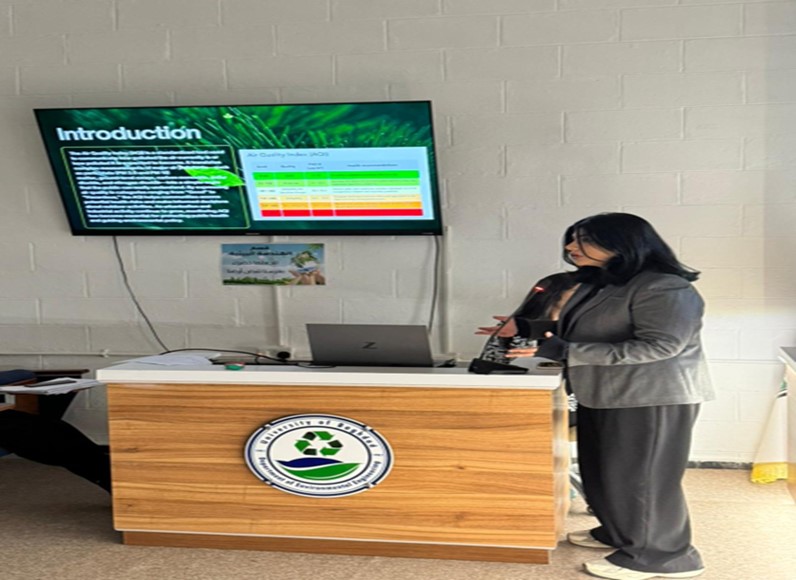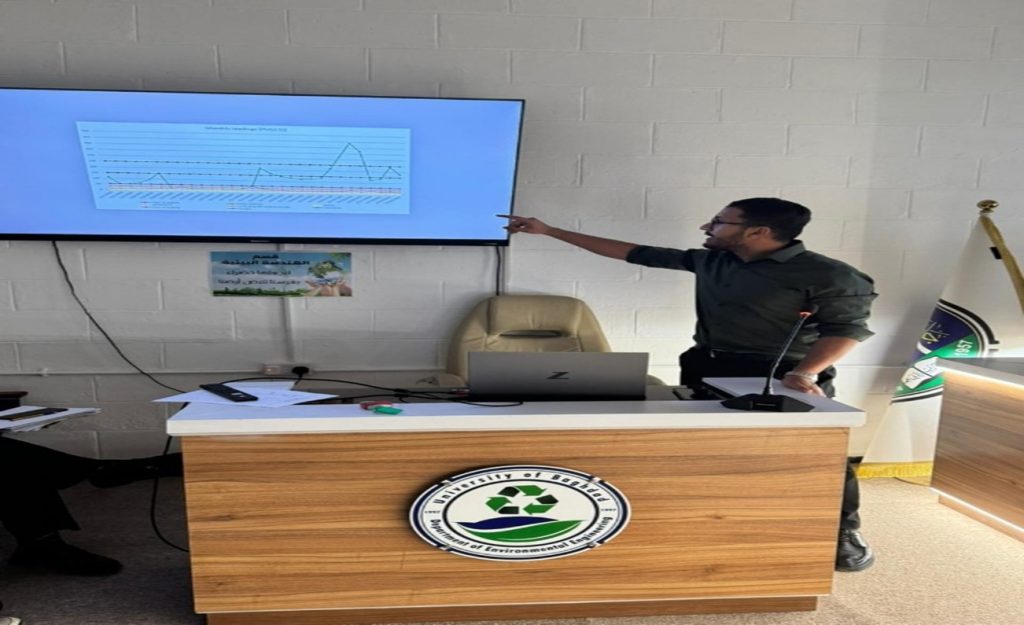
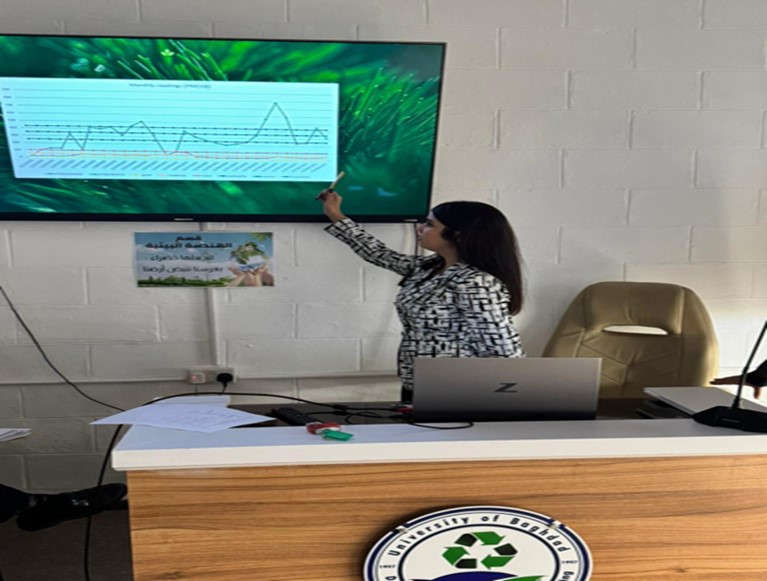
Under the patronage of the Dean of the College of Engineering, Prof. Dr. Ghassan Hamid Abdulmajeed, and as part of Global Entrepreneurship Week activities, the Department of Environmental Engineering at the College of Engineering, University of Baghdad, organized a scientific workshop on Tuesday, February 10, 2026, entitled *“Air Quality Index in Baghdad.”*
The workshop aimed to empower students to scientifically study and analyze air quality in the Al-Karkh and Al-Rusafa districts of Baghdad, link findings to environmental and health impacts, and strengthen the role of environmental engineers in providing practical, monitoring-based solutions to support decision-makers in developing effective pollution reduction plans.
The workshop was delivered by a distinguished group of fourth-year students: Rusul Salam Ali, Misk Ahmed Khashan, Fatima Mudhafar Abdul Ali, and Jaafar Al-Sadiq Ali Khanjar, under the supervision of Asst. Prof. Dr. Haider Mohammed Abdulhameed. The presenters discussed the concept of the Air Quality Index (AQI), its calculation mechanisms, key gaseous pollutants, and their health impacts when exceeding permissible limits, while also highlighting effective environmental management strategies to mitigate emission risks.
The students based their study on field data collected over a three-month period from January 11, 2025, to February 19, 2026, using on-site monitoring devices. These were complemented by theoretical measurements obtained from the Windy platform, which specializes in meteorological mapping and precise forecasting. Readings were documented every six hours daily and compiled into a monthly database, which was then analyzed using AQI calculation equations.
The results revealed a noticeable increase in fine particulate matter (PM2.5) concentrations during dust storms, as well as elevated nitrogen dioxide (NO₂) levels in urban areas. Several days recorded pollutant levels exceeding recommended health standards.
The workshop concluded with a set of recommendations emphasizing the need to obligate industrial sectors to install emission control systems, adopt alternatives to fossil fuels, conduct periodic maintenance of chimneys and generators, implement environmental management systems, prevent random waste burning, develop regulated sanitary landfill sites, expand afforestation and sustainable urban planning, and strengthen legislative and regulatory frameworks. It also stressed intensifying community awareness programs to improve air quality and reduce associated health risks.