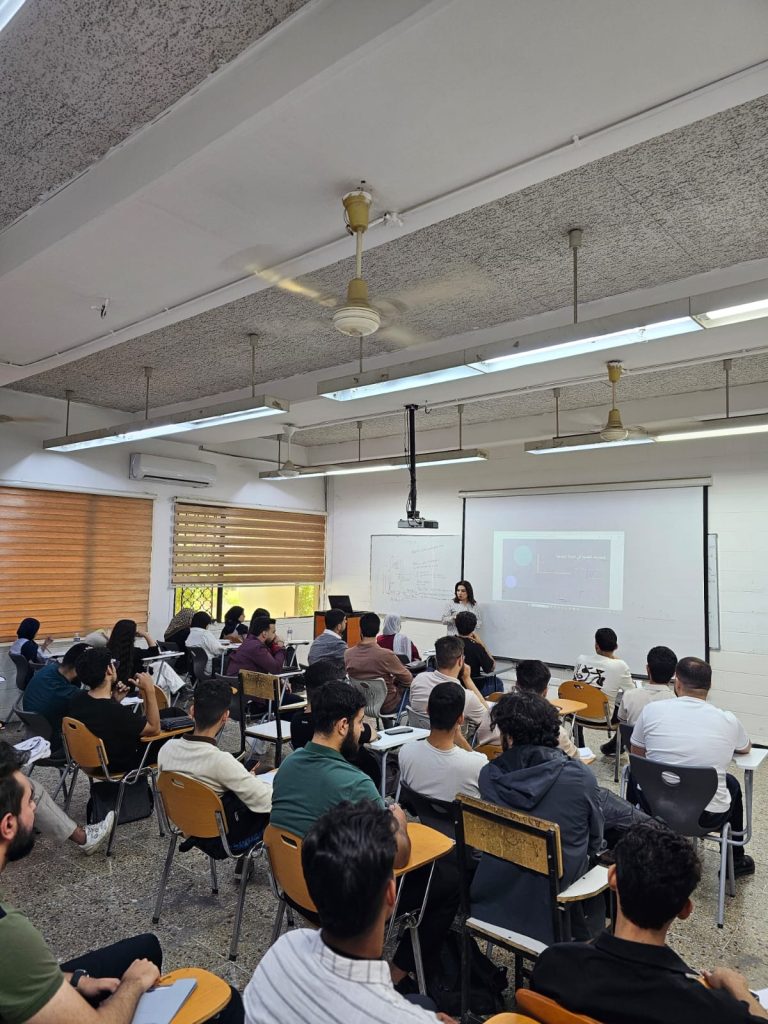

The Human Rights Unit at the College of Engineering, University of Baghdad, in cooperation with the Continuing Education Unit and the Environmental Engineering Department, organized a scientific workshop titled “Administrative Corruption and Its Impact on Engineering Projects.” The session was delivered by Assistant Lecturer Osama Hassan Ali and attended by a number of college students.
The workshop aimed to shed light on the phenomenon of administrative corruption and its negative repercussions on the engineering projects sector. It addressed the concept of corruption and its various forms, highlighting its direct impact on project delays, increased implementation costs, and the decline in infrastructure quality.
The lecturer also reviewed the main causes behind the spread of corruption in engineering institutions, including weak oversight systems, complex administrative procedures, and the lack of transparency in contracting and implementation phases. He emphasized the need to adopt effective measures to reduce this phenomenon.
He further pointed to the importance of promoting integrity in engineering work through strict enforcement of laws, the adoption of advanced monitoring systems, and the development of engineering staff skills in management and professional accountability.
The workshop concluded with several recommendations, most notably enhancing transparency at all stages of project implementation, activating the role of audit committees, adopting clear criteria for selecting executing companies, and incorporating concepts of integrity and anti-corruption into engineering curricula.
This workshop is part of a series of activities organized by the Human Rights Unit, aiming to promote professional and ethical awareness among students and to reinforce a culture of integrity and responsibility within the academic and engineering environment.