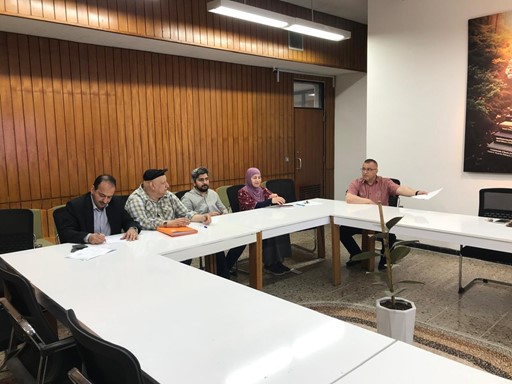
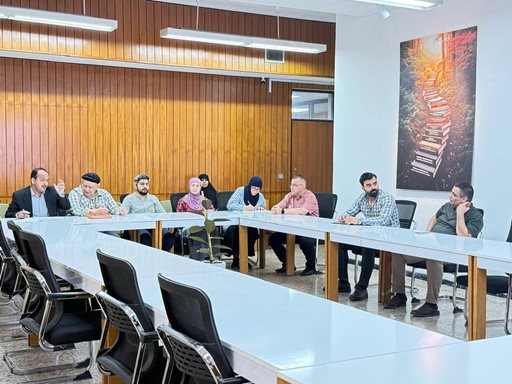
The Department of Electrical Engineering at the College of Engineering, University of Baghdad, in cooperation with the Continuing Education Unit, organized a scientific workshop titled “Mechanisms and Standards for Calculating the Cost of Solar Energy Systems in Iraq: A Case Study of a 5 MW Power Plant.” The workshop was held on Monday, April 27, 2026, in the department’s meeting hall.
The workshop was delivered by Assistant Lecturer Hussein Alawi Salim, who presented the findings of a joint scientific study conducted in collaboration with Prof. Dr. Firas Mohammed Tuaima. The event was attended by the Head of the Department of Electrical Engineering, along with several faculty members, staff, and individuals interested in the field of renewable energy.
The workshop included an analytical economic and engineering overview of the solar energy sector in Iraq, highlighting the country’s significant potential due to its location within the global solar belt, making it well-suited for investment in clean energy projects.
It also provided a detailed explanation of cost indicators, including initial capital expenditures (CapEx) and operation and maintenance costs (OpEx), with particular emphasis on the importance of cleaning solar panels under local climatic conditions. Furthermore, the concept of Levelized Cost of Energy (LCOE) was discussed, along with methods for calculating it over the project’s operational lifespan. The study demonstrated the potential to achieve competitive energy costs of approximately 45 Iraqi dinars per kilowatt-hour.
In addition, the workshop addressed spatial requirements for establishing solar power plants, indicating that a 5 MW facility would require an area of approximately 30 Iraqi dunams.
The workshop concluded with several key recommendations, including the need to allocate budgets for regular maintenance to mitigate the effects of dust storms, and to optimize panel spacing to reduce shading and enhance energy production efficiency.
The event witnessed active engagement from participants through an open discussion session, where various questions were addressed. Attendees emphasized the importance of such studies in supporting investment in the renewable energy sector and promoting the sustainability of Iraq’s energy system.