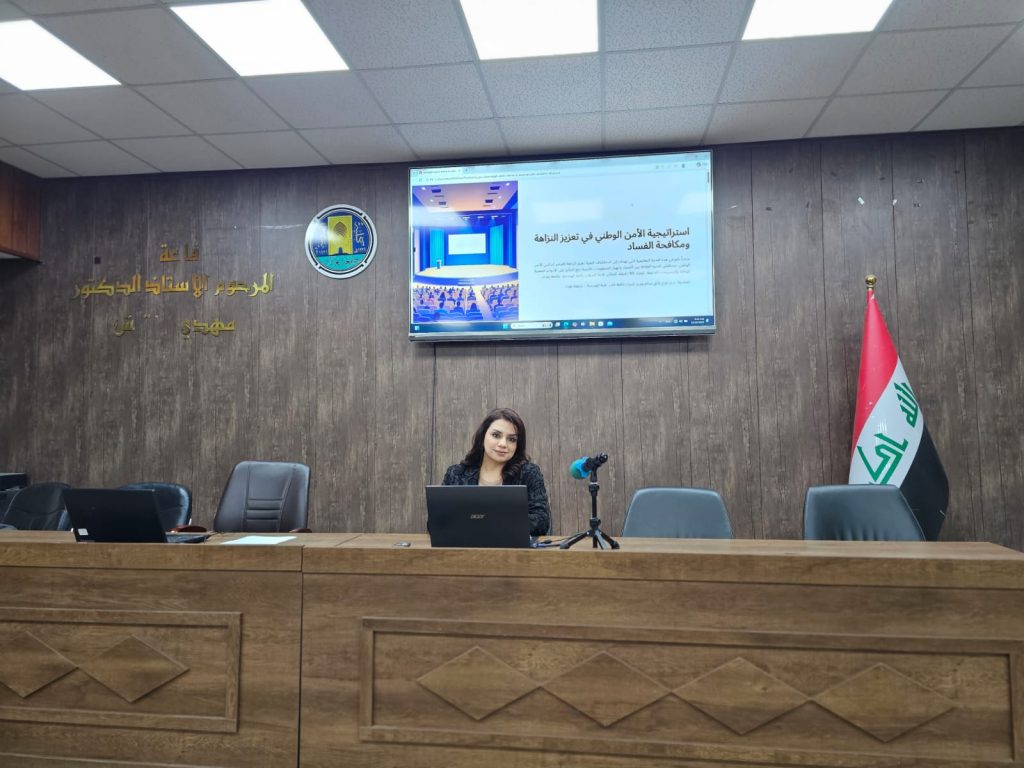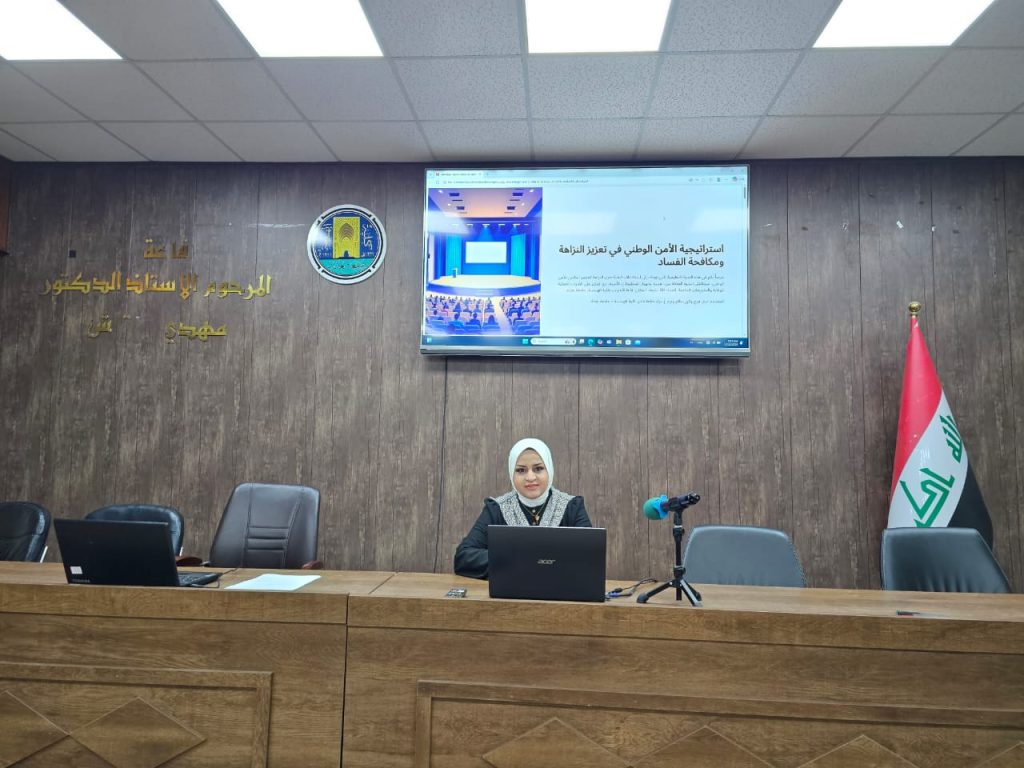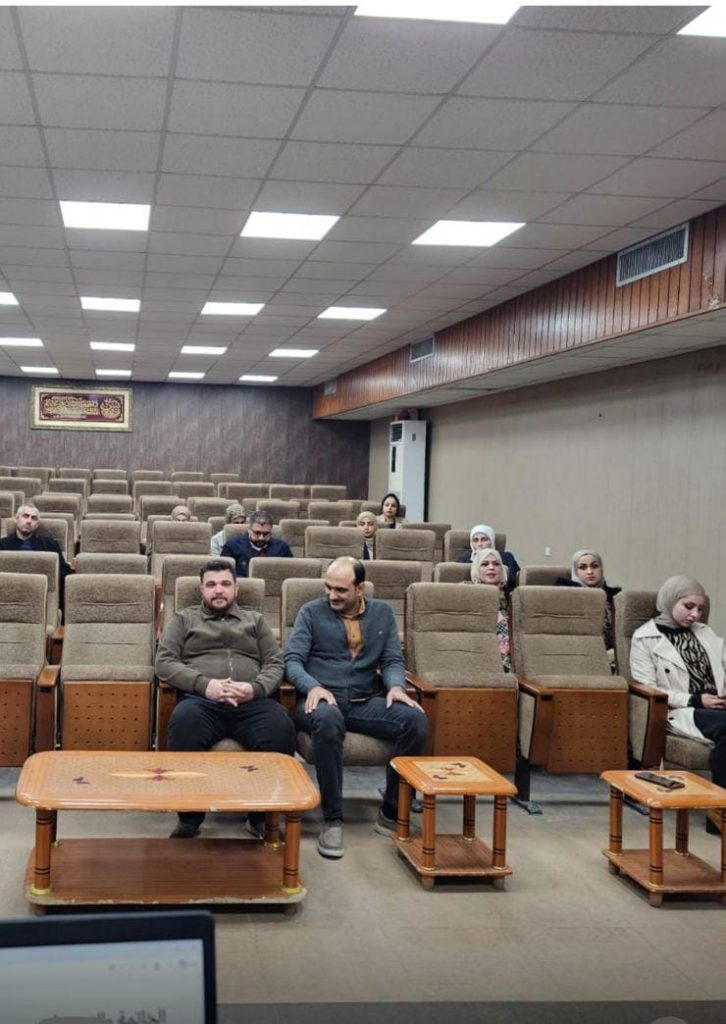
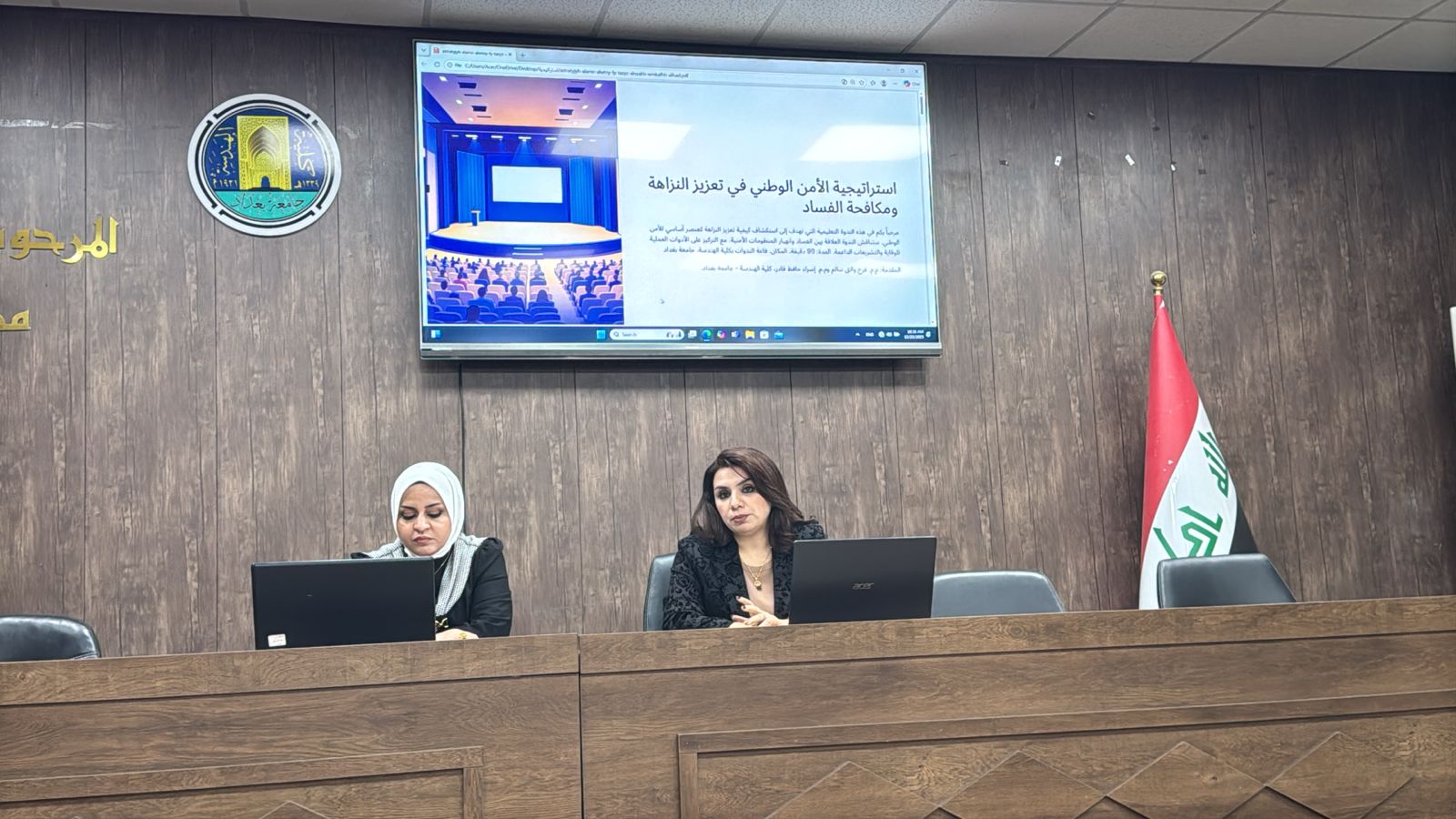
Under the patronage of the Dean of the College of Engineering at the University of Baghdad, Professor Dr. Ghassan Hamid Abdul Majeed, the Human Rights Unit at the College organized, on Monday, December 22, 2025, and in cooperation with the Continuing Education Unit, a scientific workshop entitled “The National Security Strategy in Promoting Integrity and Combating Corruption.”
The workshop was delivered by Assistant Lecturer Isra’a Hafez Qadir and Assistant Lecturer Farah Wathiq Salem.
The workshop aimed to shed light on the role of the national security strategy in consolidating the principles of integrity and transparency and combating corruption, which is considered one of the most significant challenges threatening the stability and security of the state. Assistant Lecturer Isra’a Hafez Qadir addressed the concept of comprehensive national security and its importance, emphasizing that the strength of the state stems from the strength of its citizens, institutions, and laws. She also reviewed the political, economic, and social dimensions of national security, as well as the importance of integrity and ways to implement it within government institutions.
Meanwhile, Assistant Lecturer Farah Wathiq Salem discussed the concept of corruption and its various forms, its direct impact on national security, in addition to laws related to the right of access to information. She presented examples from Arab countries that have implemented such laws and highlighted their role in enhancing transparency and reducing manifestations of corruption.
At the conclusion of the workshop, the speakers emphasized the importance of integration between oversight bodies and security institutions, the enforcement of laws, the promotion of the principle of accountability, and the dissemination of a culture of integrity. They also highlighted the role of awareness and capacity building in preventing corruption, noting that achieving sustainable national security requires combating corruption as a fundamental entry point for administrative reform and the consolidation of good governance principles.