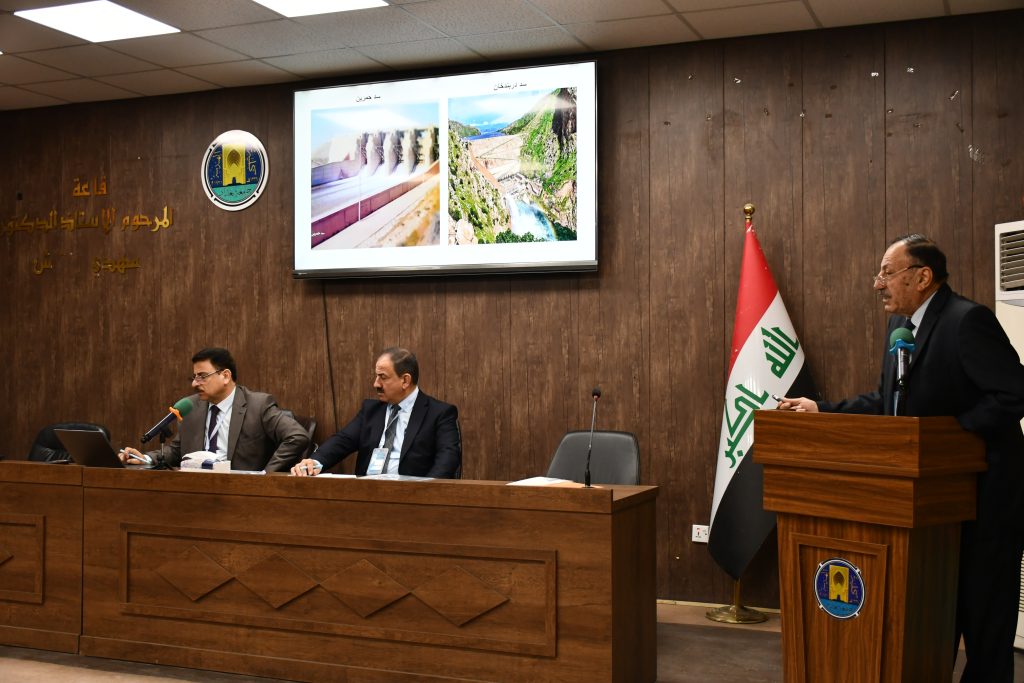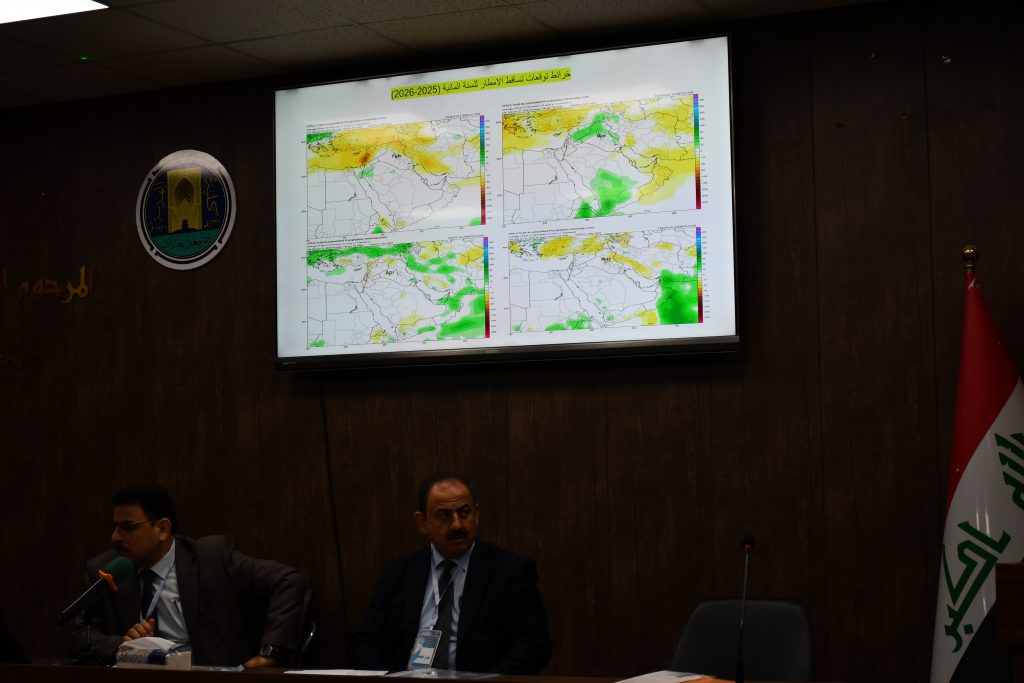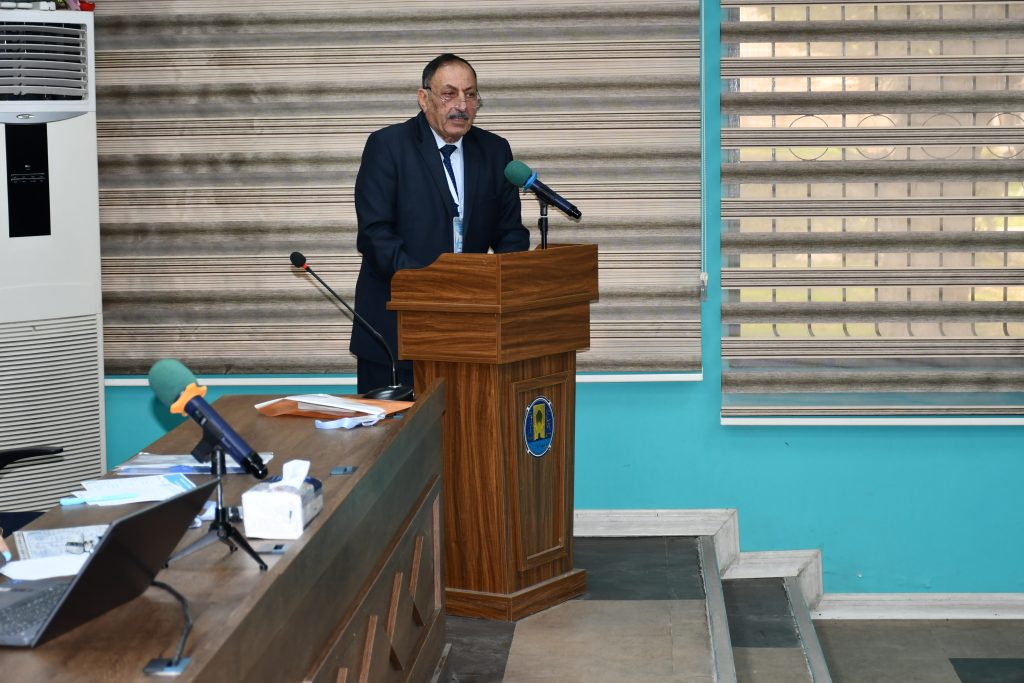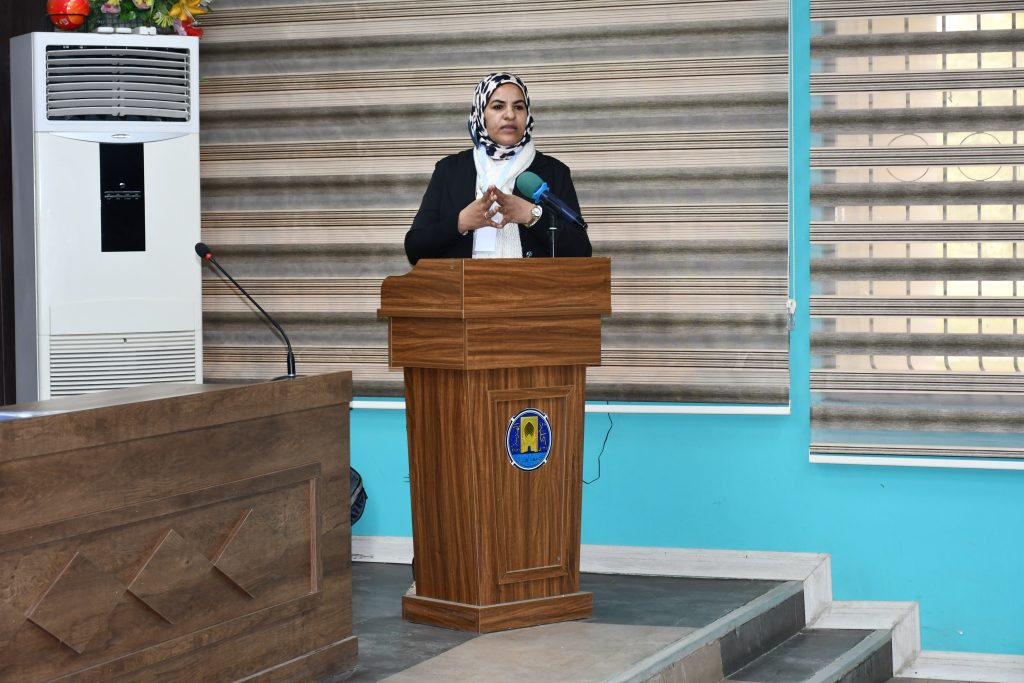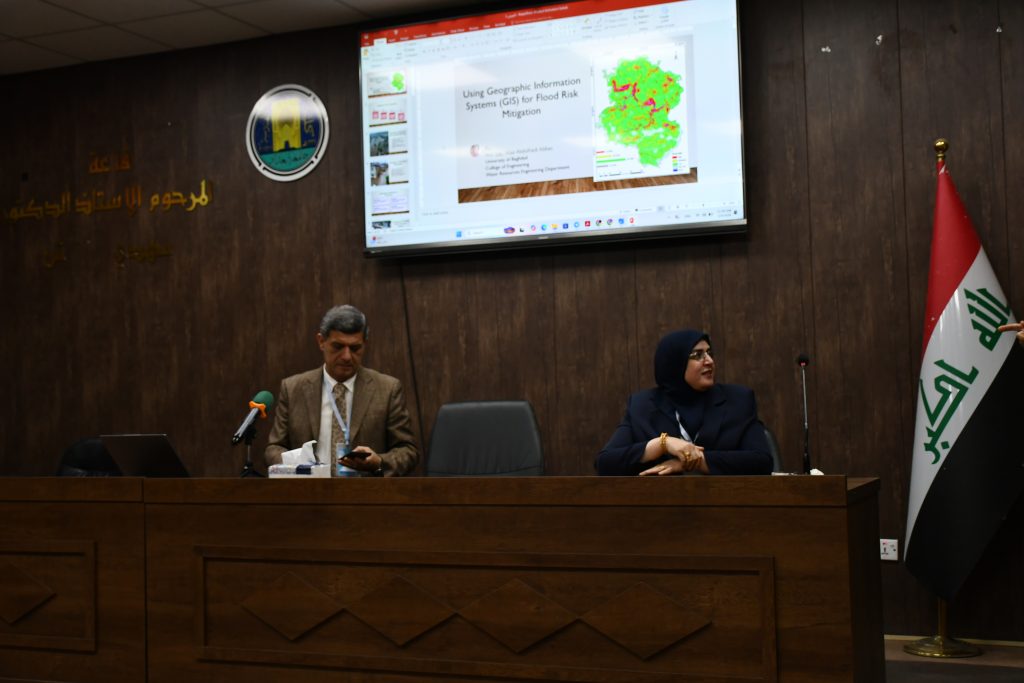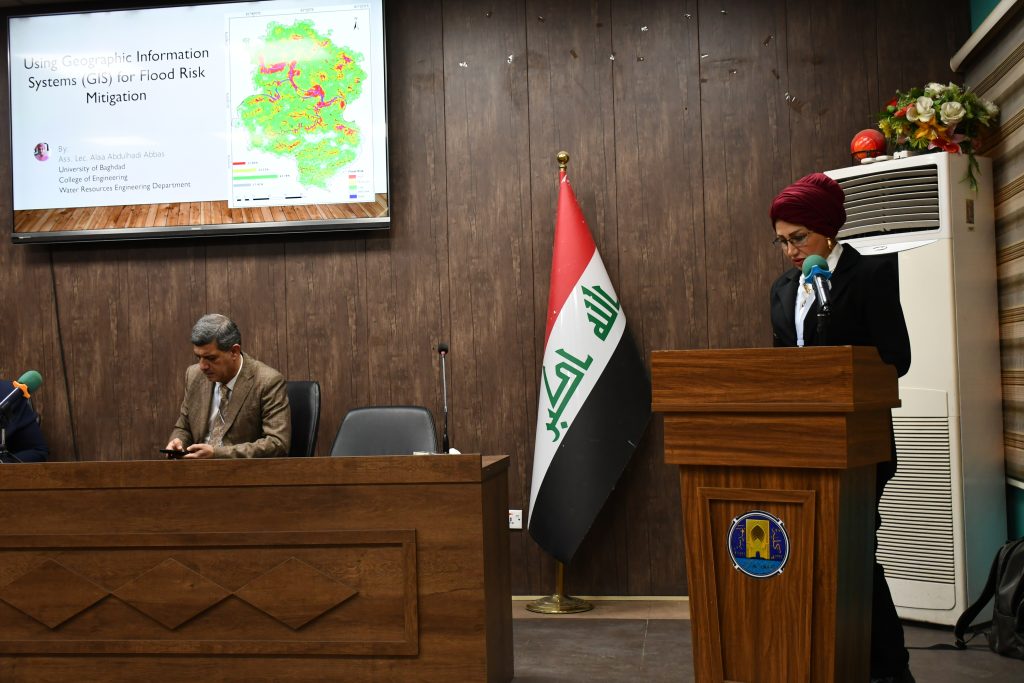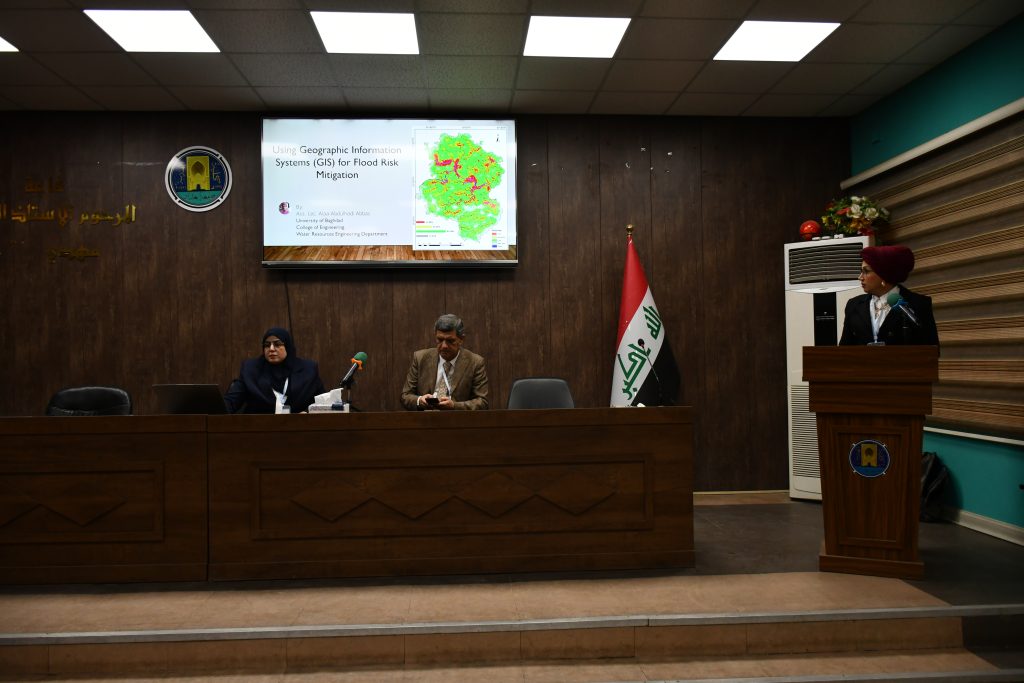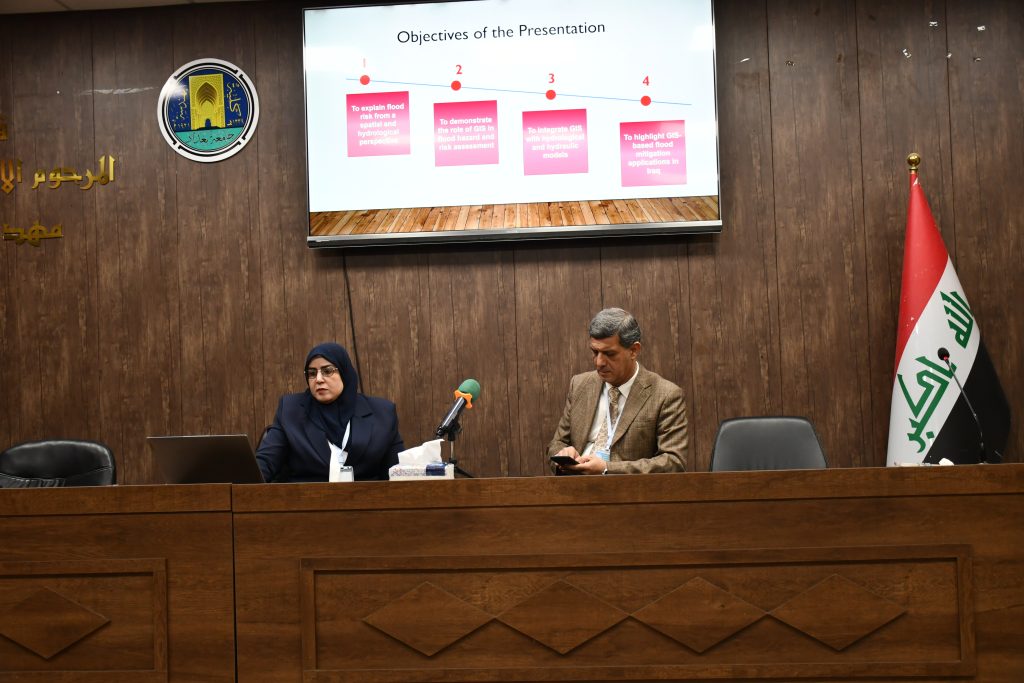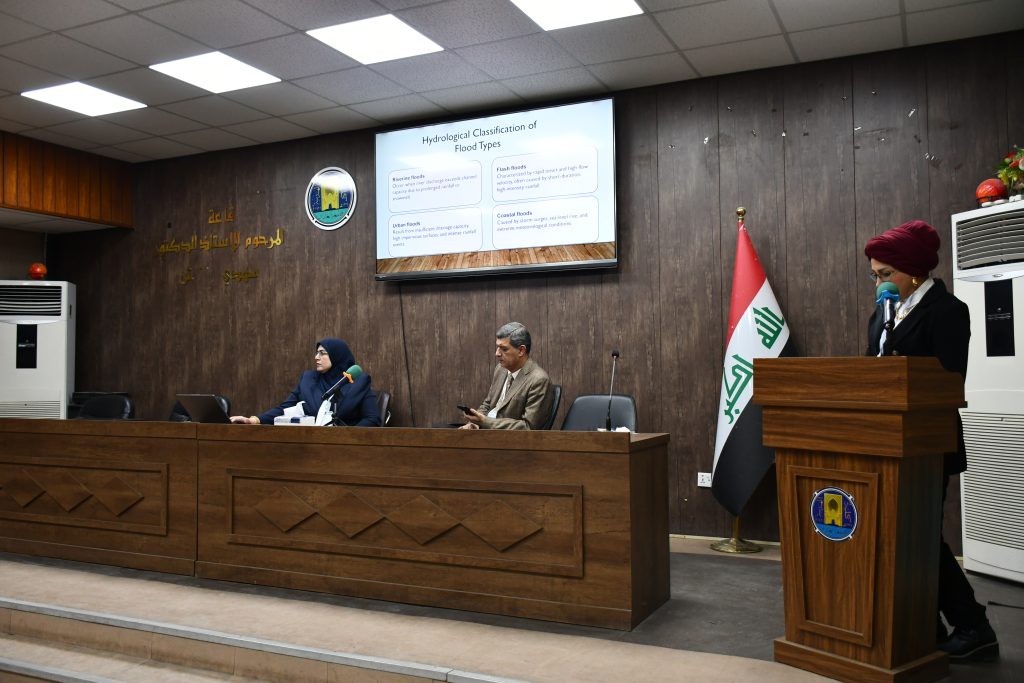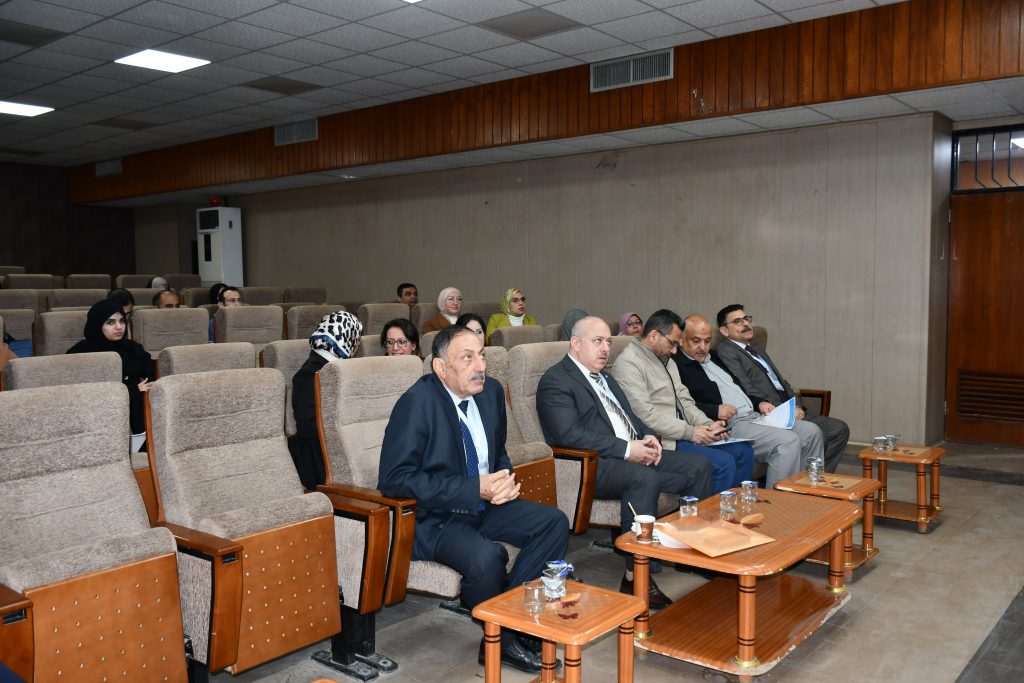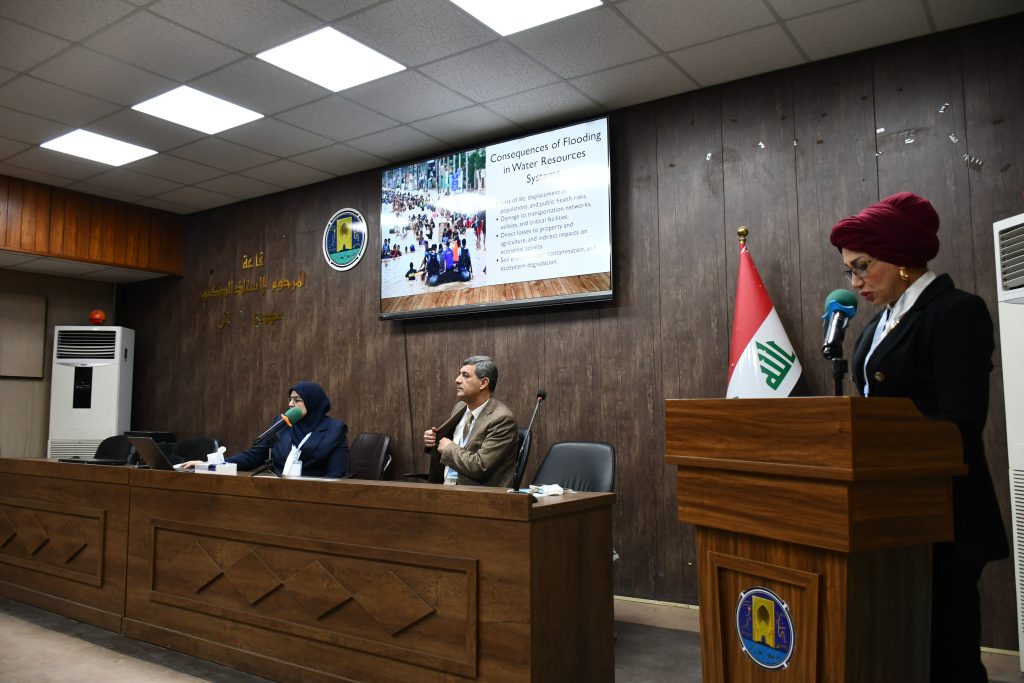
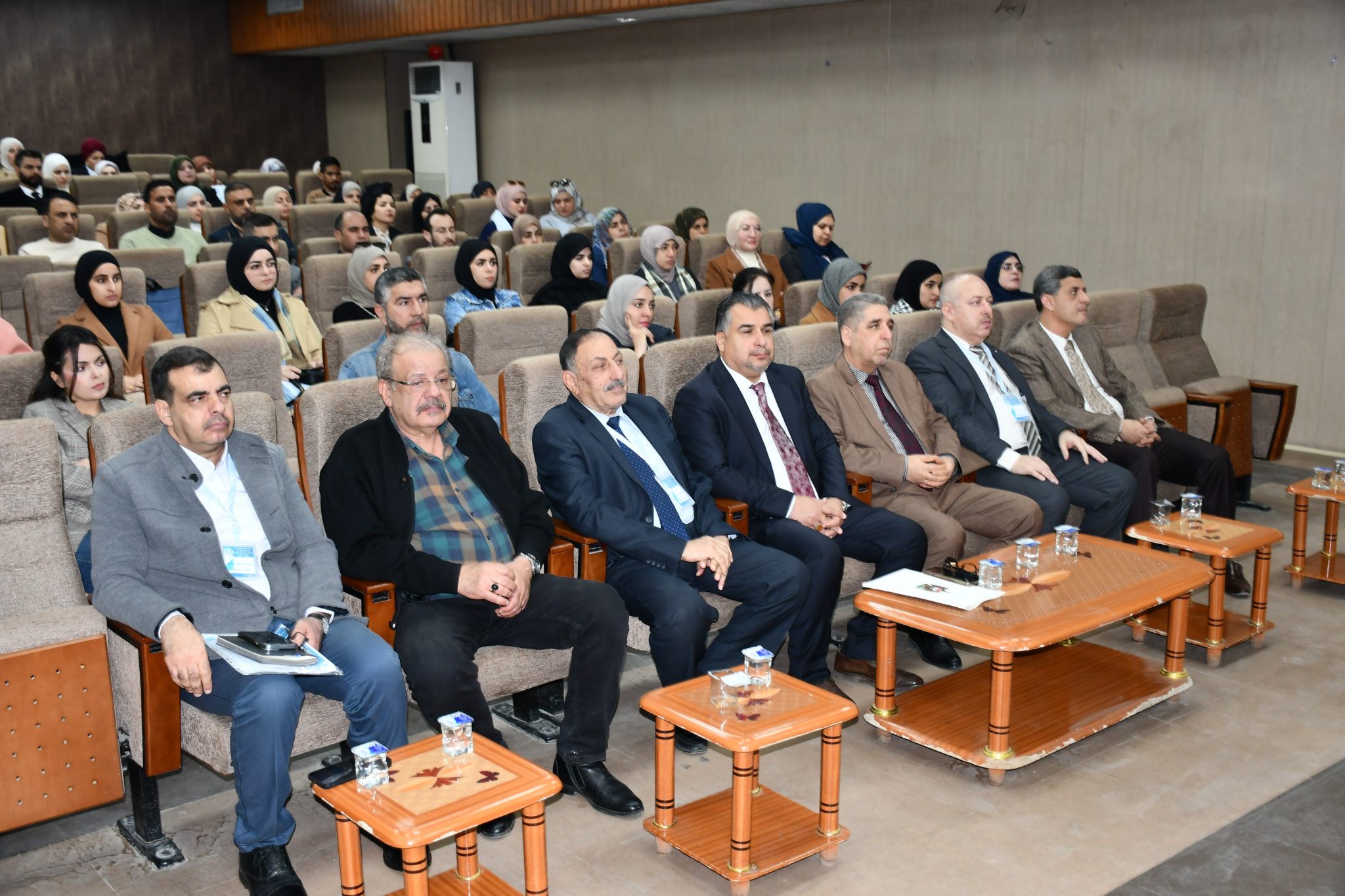
Under the patronage of the Dean of the College of Engineering, Professor Dr. Ghassan Hamid Abdul Majeed, and under the supervision of Dr. Amin Mohammed Saleh Amin, Head of the Water Resources Engineering Department, and in the presence of the Assistant Dean for Administrative Affairs, Professor Dr. Faleh Hassan Mohammed, the College of Engineering – Water Resources Engineering Department at the University of Baghdad organized a scientific seminar on Monday, February 9, 2026, in cooperation with the Ministry of Water Resources, entitled:
“Local Plans and International Cooperation to Mitigate the Risks of Changes in Extreme Hydrological Events (Floods – Droughts)”
The seminar aimed to highlight the increasing challenges facing water resources in Iraq as a result of climate change, particularly the risks of floods and droughts. It also discussed the role of local planning and international cooperation in reducing the impacts of these phenomena, in addition to reviewing modern technologies and successful international experiences in water disaster management.
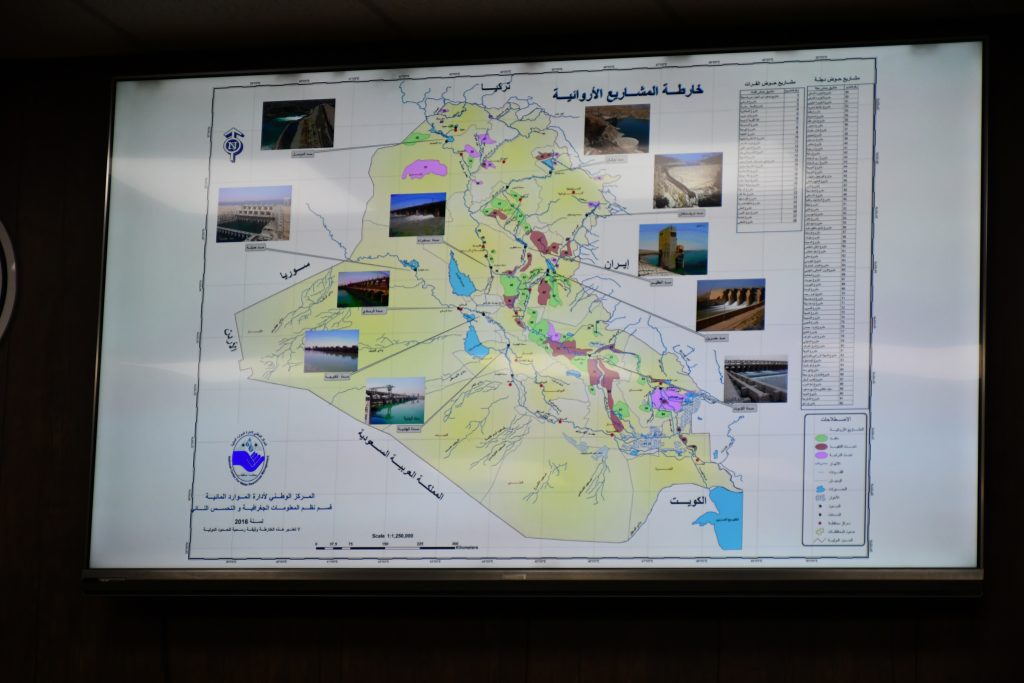
The seminar presented an analytical overview of the current state of water resources in Iraq, noting that the country is experiencing a noticeable recurrence of droughts and floods due to fluctuations in rainfall and rising temperatures, in addition to the impact of dam and reservoir operation policies in upstream countries. This has led to reduced water inflows and a decline in strategic storage, accompanied by environmental, economic, and social consequences, including shrinking agricultural areas and increasing rates of desertification.
Participants also discussed the importance of adopting Integrated Water Resources Management (IWRM) by improving water-use efficiency across various sectors, developing storage systems and flood control measures, and strengthening the role of Geographic Information Systems (GIS), remote sensing, and artificial intelligence in forecasting, early warning, and risk management. Emphasis was also placed on enhancing international cooperation and the exchange of data and expertise with neighboring countries and international organizations to support Iraq’s water security.
The seminar covered several key themes, including:
- Local plans and integrated management of extreme hydrological event risks.
- The status of water resources in Iraq and climate change-related challenges.
- The role of GIS and artificial intelligence in forecasting and early warning.
- The importance of international cooperation and knowledge exchange in mitigating flood and drought risks.
The seminar program included four specialized scientific lectures:
- Lecture One: Water Resources in Iraq: Reality and Challenges, delivered by Expert Engineer Hassan Mahdi Al-Saffar from the Ministry of Water Resources / National Center for Water Resources Management.
- Lecture Two: International Partnerships to Support Water Security in Iraq under Climate Change, delivered by Chief Senior Engineer Shaimaa Ubaid Karim from the Ministry of Water Resources / Planning Directorate.
- Lecture Three: Applications of GIS in Flood Risk Mitigation, delivered by Assistant Lecturer Alaa Abdulhadi Abbas from the College of Engineering / Water Resources Engineering Department.
- Lecture Four: Applications of Artificial Intelligence in Assessing and Managing Extreme Hydrological Events, delivered by Professor Dr. Mahmoud Saleh Mahdi from the College of Engineering / Water Resources Engineering Department.
The seminar also addressed several national and international projects related to water resources management, including water harvesting projects, monitoring agricultural water productivity using remote sensing technologies (WaPOR), climate-smart agriculture initiatives, and projects supported by international organizations that contribute to enhancing Iraq’s capacity to adapt to climate change and improve water and food security.
At the conclusion of the seminar, participants emphasized the importance of strengthening cooperation between academic institutions and governmental and international bodies, and the necessity of employing scientific research and modern technologies to support decision-makers and build community capacity in addressing climate change challenges and achieving water sustainability.